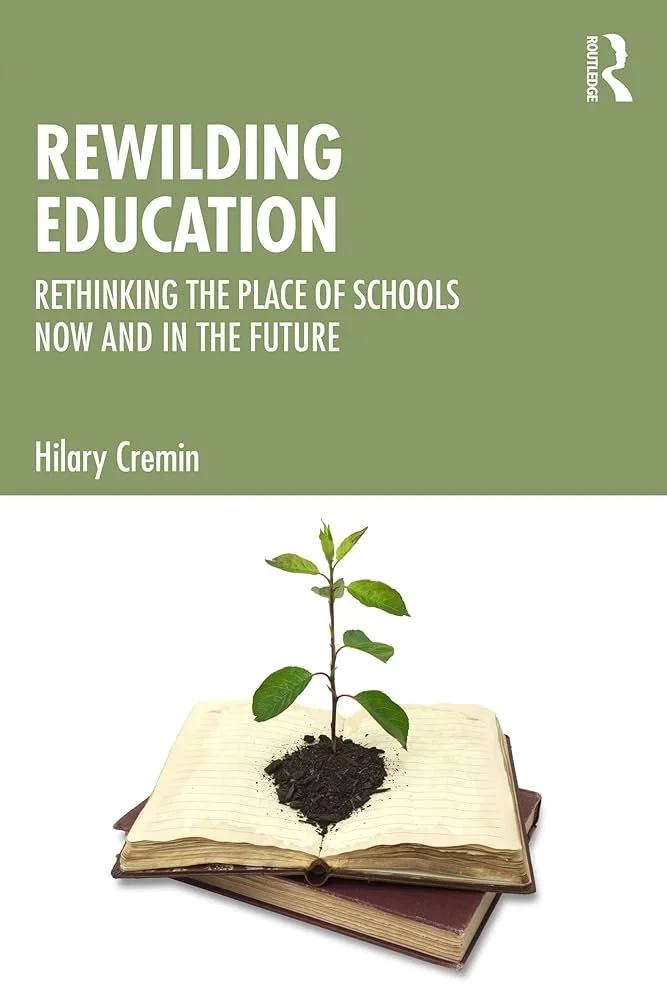

What is Rewilding Education?
Rewilding Education is a book written by Hilary Cremin, the Head of Cambridge’s Faculty of Education. In her book, she argues that modern schooling is rooted in 19th-century models focused on conformity, high-stakes testing, and rigid structures rather than preparing young people for the unpredictable challenges of today’s world.
Schools may be harming wellbeing, not just educating.
She highlights research and observations linking the loss of physical activity, excessive exams, and punitive behaviour policies to rising mental and physical health problems in both students and teachers.Education deepens inequality instead of closing gaps.
The book challenges the belief that schooling equals social mobility, presenting evidence that disadvantaged students remain far less likely to thrive under current systems, with attainment gaps widening throughout schooling.Rewilding is proposed as a new vision.
Drawing on ecological metaphors, Cremin suggests “rewilding” education - loosening rigid control, embracing holistic and unpredictable learning, and integrating nature, community projects, the arts, and reflective practices into school life.Learning should be broader than academics alone.
She argues for education that nurtures critical thinking, creativity, social and emotional skills, and a deeper connection to the natural world, preparing children not just for jobs but for life in a rapidly changing, uncertain future.
The final takeaway: Rewilding Education calls for a shift away from rigid, test-driven models toward a more balanced approach that includes project-based learning, the arts, civic engagement, and reflective practices. Rather than asking students simply to absorb and reproduce information, this vision emphasizes cultivating wisdom, critical thinking, and care when confronting complex real-world challenges. It supports educating the whole child by allowing space for reflection (such as walking while thinking through difficult questions), aligning school schedules with adolescents’ biological sleep patterns, and incorporating mindfulness and metacognitive strategies that help students become aware of how they think as they learn.